Film and coatings lock in the condition of your paint. Here is why proper preparation matters so much.
Whether you choose paint protection film, a ceramic coating or both, the result can only be as good as the paint beneath it. That is why professional detailing and, where needed, paint correction come first.
Step 1: Thorough wash
A careful hand wash removes loose dirt without adding new swirls. Wheels, arches and shut lines are cleaned so no grit ends up under film edges.
Step 2: Decontamination
Even a clean-looking car carries bonded contamination — tar, iron fallout and overspray. Chemical decontamination and a clay treatment leave the surface smooth so film and coatings can bond properly.
Step 3: Inspection
Under strong inspection lighting we check for swirls, holograms, scratches and chips. This shows whether a light polish is enough or correction is needed.
Step 4: Paint correction (if needed)
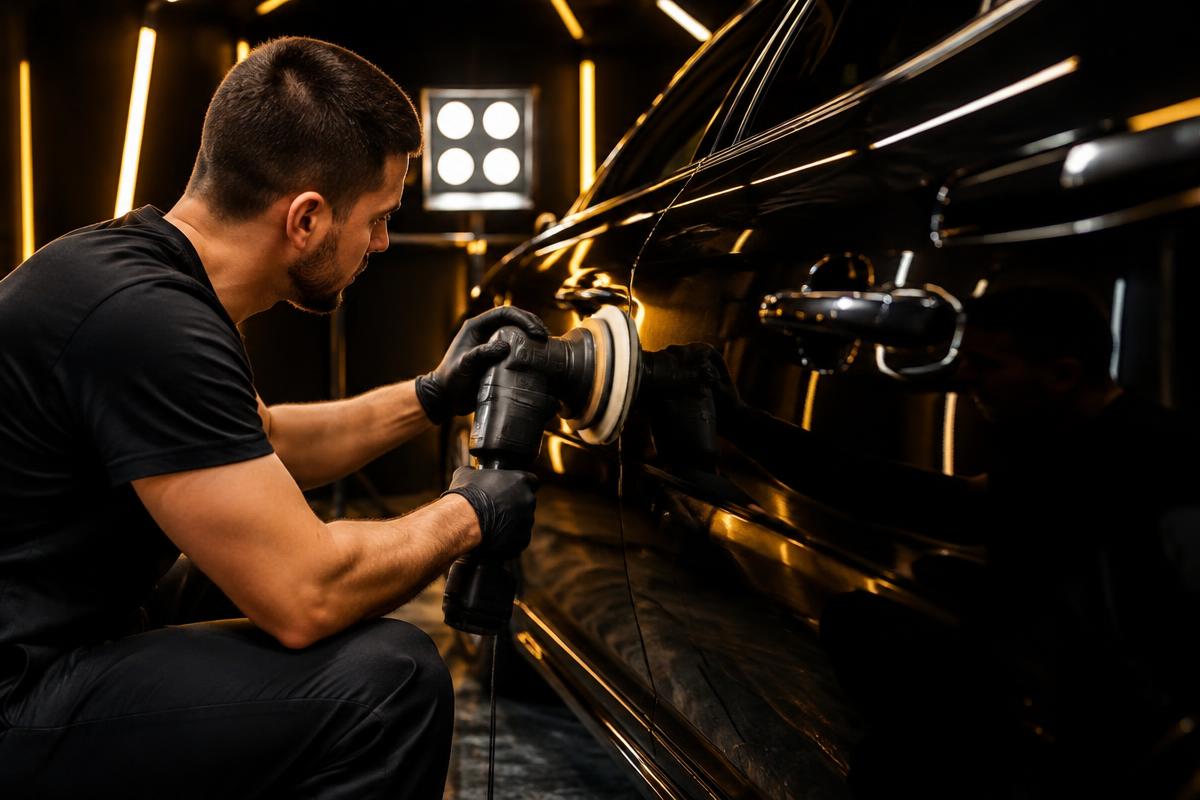
Machine polishing removes a very thin layer of clear coat to level out swirls and light scratches, restoring clarity. Deep scratches through the clear coat or chips to the primer cannot be polished out and may need touch-up first.
Step 5: Final wipe and protection
Polishing oils are removed with a panel wipe so the surface is clean, then film or coating is applied.
What this means for new cars
New vehicles are not always perfect — transport and dealer washes can leave marks. A light polish before protection is often worthwhile even on a car with very low mileage.
Book an assessment and we will advise on the preparation your paint needs before protection.